
Creatine Calculator – Calculate Proper Dosage
Find your optimal daily creatine dosage.
Formulas: 0.05g (Maintenance) or 0.3g (Loading) per kg body weight
A loading phase saturates muscle stores faster (in ~1 week), but is not strictly necessary. With the maintenance dose, stores will be full after ~3-4 weeks.
Creatine Calculator: The Optimal Dose for Maximum Muscle Growth
Creatine is the most intensively debated and best-researched nutritional supplement in the world. No other legal substance increases strength and muscle building more measurably and reliably than creatine. But how much does the body actually need? Is a "loading phase" still necessary? And should you take it in cycles or permanently? Our digital Creatine Calculator exactly determines your individual needs. Here you will learn everything about its effects.
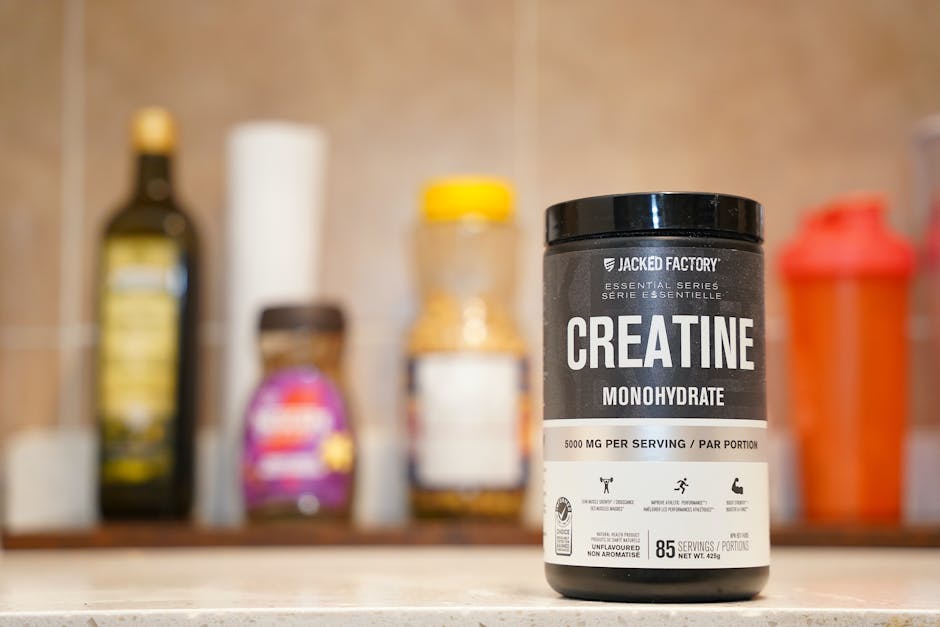
How does Creatine work? (The science simply explained)
Creatine isn't magic, and it certainly isn't a steroid! It is an organic acid that your body partially produces itself (in the kidneys, liver, and pancreas) and that you absorb through meat and fish. Over 95% of creatine is stored in your skeletal muscles – in the form of phosphocreatine.
The mechanism: When you press a barbell, the muscle burns ATP (adenosine triphosphate) for the very first, short burst of maximum strength exertion. However, this ATP is depleted after only about 2-3 seconds. The phosphocreatine now present in the muscles "recycles" the waste product ADP back into ATP at lightning speed.
- More Strength: The muscles have energy for a few crucial seconds longer. Instead of 8 repetitions with 100 kg, you might now manage 10.
- More Volume (Hypertrophy): This stronger stimulus during training ultimately leads to more muscle growth.
- Fuller Look: Creatine binds water. However, this happens intracellularly (in the muscle cell itself), not under the skin. As a result, the muscles immediately look more voluminous and hydrated, but not "bloated".
Do I need a loading phase?
It used to be recommended to take 20g of creatine daily (divided into 4 portions) during the first week to fill the stores super-fast. Today we know: That is completely unnecessary.While the stores are indeed full faster (after a week instead of a month), the body simply excretes a large part of it through the urine anyway, doing no favors to the kidneys or your wallet. Instead, start your maintenance dose immediately.
How does FitScale calculate my creatine needs?
An oft-heard rule of thumb in gyms is: "Just 5 grams every day." For the average man (80 kg), that fits perfectly. But if you are a 55 kg athlete or a massive 110 kg bodybuilder, your muscle mass depots fundamentally require different amounts to permanently remain at 100% saturation.
The Optimal Formula
The current recommendation from the International Society of Sports Nutrition (ISSN) is, after filling the stores, a daily maintenance dose of:
0.03 g to 0.05 g of creatine per kilogram of body weight
Also keep in mind: Those who eat a vegan or vegetarian dietoften need the full dose (0.05g / kg), as no raw beef or fish are consumed in daily life, which are natural creatine sources. Our tool filters exactly for this!
The Biggest Myths About Creatine
Unfortunately, there is hardly any place where more half-truths circulate than in fitness forums. Let's clear them up:
- "Creatine causes hair loss" (False!): A single Asian rugby study in 2009 showed slightly elevated DHT levels. This study could never be replicated, and creatine demonstrably has no effect on hereditary hair loss.
- "Creatine damages the kidneys" (False!): For completely healthy individuals, a dose of 5 grams of creatine per day is of absolutely no concern to the kidneys. (A nephrologist should only be consulted if there are medically known pre-existing kidney conditions).
- "You have to take it in cycles" (False!): A so-called "creatine cycle" (2 months on, 1 month off) is pointless. The body minimally downregulates its own production upon ingestion, but ramps it back up to 100% immediately as soon as you stop. Creatine should be taken permanently, 365 days a year.
- Which form? (Creapure vs. Monohydrate): Just buy the cheapest Creatine Monohydrate (often labeled as Creapure). Kre-Alkalyn, Creatine-HCL, or other expensive variants are pure marketing and, according to studies, in no way superior to monohydrate.
Instructions: How to take Creatine
- Use our calculator to determine your daily needs (e.g., 4.5 grams).
- Take this portion every day (Yes, even on non-training days).
- Timing is secondary. Simply mix the flavorless powder into a glass of water in the morning or into your Protein Shake after sports. (Co-ingestion with carbohydrates/insulin pushes it marginally better into the muscle cell).
- Make sure to drink enough water every day.
Frequently Asked Questions
Do I need a loading phase?
No, a loading phase (20g/day for 5 days) is not strictly necessary. A consistent daily dose of 3-5g will also saturate your stores, it just takes about 3-4 weeks longer.
When is the best time to take creatine?
Timing is secondary. What matters most is daily, consistent intake. Many prefer taking it right after training or in the morning on an empty stomach.
Does creatine cause water retention?
Creatine draws water into the muscle cells, which can lead to slight weight gain. However, this is intracellular and makes muscles look fuller, not bloated.
Does creatine harm the kidneys?
In healthy individuals, creatine does not harm the kidneys. However, if you have pre-existing kidney conditions, you should consult a doctor before use.
Which type of creatine is best?
Creatine Monohydrate (ideally Creapure®) is the most well-researched and effective form. Other more expensive forms usually offer no measurable extra benefit.