
Raw to Cooked Calculator – Convert Food Accurately
Raw to Cooked Calculator – The Ultimate Tracking Guide
Anyone serious about building muscle, losing weight, or simply maintaining their weight can hardly avoid counting calories and macronutrients. But when meal-prepping or cooking daily, almost everyone stumbles over the same crucial problem: Do I weigh my food raw or cooked?
The short answer is: Always weigh raw! But in everyday life, this is not always possible (e.g., in the cafeteria or when cooking large portions). This is where the Raw to Cooked Calculator comes into play, solving the problem with mathematical precision.
The Most Important Rule of Thermodynamics
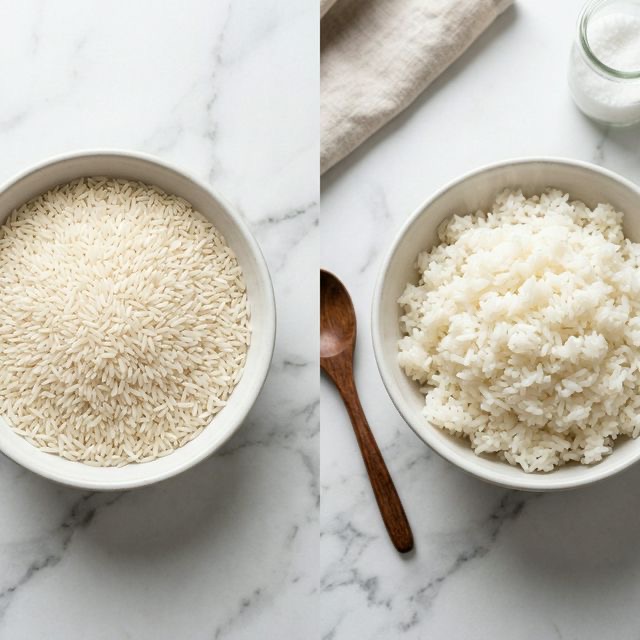
Heat creates no calories and destroys no calories. The nutritional values (proteins, carbohydrates, fats) and thus the calories of your food remain identical during boiling, frying, or baking. Only the weight changes!
Why does weight change when cooking?
The reason for the often drastic weight change during cooking is simply water. Depending on the type of food and the preparation method, one of two things happens:
1. Water Absorption (Factor > 1.0)
The classic example of foods that bind water when cooking are carbohydrate sources. Dry grain products and legumes soak up water when boiled.
- Convert raw to cooked rice: 100g of raw rice (approx. 350 kcal) turns into about 250g to 300g of cooked rice in the pot through water absorption.
- Pasta: Similar to rice, pasta absorbs an extreme amount of water. 100g of raw pasta easily weighs 250g after 10 minutes in boiling water.
- Oats & Lentils: Porridge or lentil stew also often triple their volume and weight.
The Result: The finished product is significantly heavier. But since water has no calories, the calorie density per 100g drops massively. 100g of cooked rice has significantly fewer calories than 100g of raw rice!
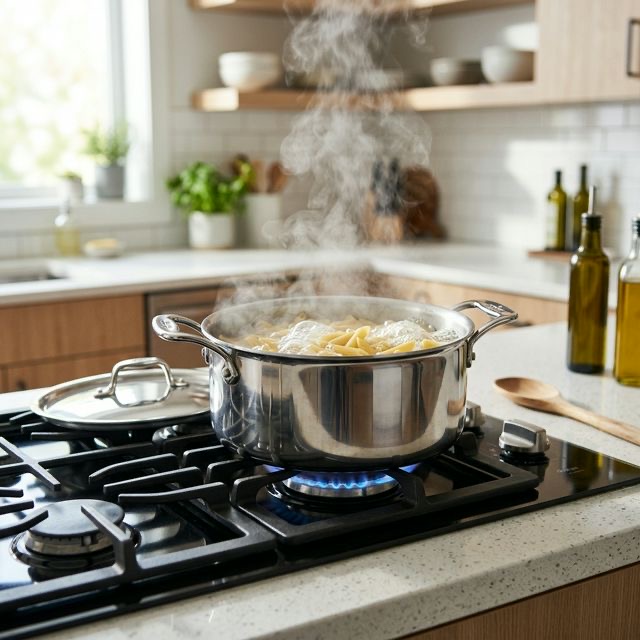
2. Water Loss (Factor < 1.0)
The exact opposite happens with protein-rich animal foods or highly water-containing vegetables.
- Raw to cooked chicken calories: A 200g raw chicken breast has about 220 kcal. Water evaporates when frying in the pan. After frying, the meat might only weigh 140g. However, these 140g still contain 220 kcal!
- Ground beef: When frying ground beef, not only water but also fat escapes. Therefore, the weight decreases drastically here too.
- Vegetables (e.g., Mushrooms): Anyone who has thrown 500g of mushrooms into a pan knows: After 10 minutes of frying, only a fraction of the volume is left.
Avoiding Common Calorie Tracking Mistakes
The most common and dangerous mistake on a diet (e.g., with apps like YAZIO or MyFitnessPal) is confusing raw and cooked nutritional values.
❌ Scenario 1: The Pasta Calorie Trap
You eat 300g of cooked pasta. But in your tracker app, you falsely select "Pasta (raw)" and enter 300g. The app now calculates over 1,050 kcal. In reality, 300g ofcooked pasta only have about 400 kcal (equivalent to approx. 110g of raw pasta). You think, you have reached your calorie goal, but are actually in a massive calorie deficit and wonder about cravings!
❌ Scenario 2: The Chicken Deception
You prepare a 250g turkey schnitzel (raw). On the plate lies a 170g heavy, fried schnitzel. You enter 170g "Turkey (raw)" in your app. The app calculates only approx. 185 kcal. Actually, you have eaten the calories of 250g of raw meat (approx. 275 kcal). So you unconsciously eat more calories through your conversion error and wonder why you're not losing weight!
Practical Examples for Perfect Meal-Prep
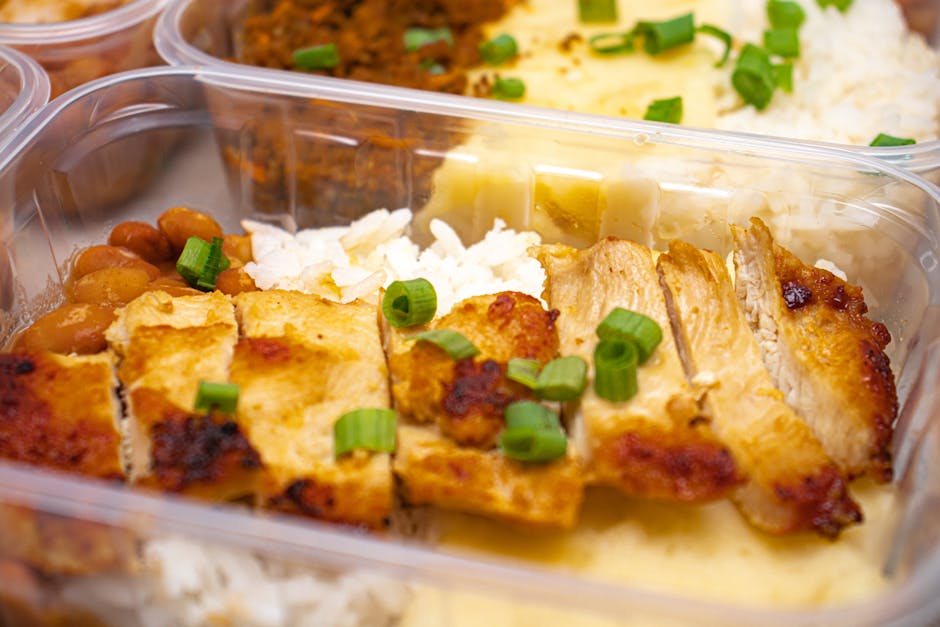
Our raw-to-cooked converter was specially developed for meal-prep enthusiasts. Let's see how you prep perfectly for the week on Sunday:
The 3-Day Curry Chicken
You want to prep chicken with rice for three days. You throw 600g of raw chicken(approx. 660 kcal / 138g protein) into the pan and cook 300g of raw rice (approx. 1,050 kcal).
After cooking, you weigh the total amounts in the kitchen:
- The cooked chicken weighs a total of 420g.
- The cooked rice weighs a total of 750g.
No need to despair! Take 3 Tupperware containers and distribute the meals:
- Each container gets 140g of cooked chicken (420g / 3).
- Each container gets 250g of cooked rice (750g / 3).
In your tracking app, simply enter exactly one third of the raw amounts for each day: I.e., 200g of chicken (raw) and 100g of rice (raw). The calculation adds up perfectly, the daily tracking is exact, and you save yourself hours of math!
The Solution: Use the FitScale Converter
If you eat in the cafeteria or can no longer weigh leftovers from the previous evening raw, our converter helps you. Select the food, specify whether the weight is raw or cooked, and type in the grams. The algorithm not only calculates the counterpart but also immediately gives you the correct macronutrients for your tracking app!
Frequently Asked Questions
How much cooked chicken do I get from 200g raw chicken?
200g raw chicken yields about 130g cooked chicken (factor 0.65). The weight reduces due to water loss during cooking. Calories stay the same!
How much heavier does rice become when cooked?
Rice absorbs water during cooking and becomes heavier (factor approx. 2.5 to 3.0). 100g of raw rice turns into about 250g to 300g of cooked rice.
Why should I track with raw weight?
Raw weight is the most accurate basis for calorie calculation, as water content can vary depending on the cooking method. Calories in the raw product are fixed.
Why does weight change during cooking?
Foods change weight through water loss or absorption. Meat loses water and becomes lighter (factor <1.0), while grains like rice absorb water and become heavier (factor >1.0).
Do calories stay the same when cooking?
Yes! Calories always stay the same when cooking. Only the weight changes. If you cook 100g raw rice with 365 kcal, you'll have 250g cooked rice with the same 365 kcal.
Related Tools
Embed this Tool
Want to use this calculator on your own blog or website? Just copy this code:
<iframe src="https://fitscale.eu/en/widget/food-converter" width="100%" height="600" frameborder="0"></iframe>