Carbohydrates have gotten a bad rep in recent years. Low-carb, keto, and similar trends suggest carbs are the enemy. For athletes, the opposite is true: carbohydrates are your most important fuel for intense performance.

Why Carbohydrates Are Essential for Athletes
Your body stores carbohydrates as glycogen in muscles and liver. This glycogen is the primary energy source during high-intensity exercise – whether strength training, sprints, or intense team sports. Fat can serve as energy too, but delivers it too slowly for explosive movements.
Meta-analyses on Examine.com confirm: muscle glycogen and endurance performance correlate directly. Training with depleted stores measurably reduces your strength and endurance.
How Many Carbs Do You Need?
Recommendations depend heavily on your sport and training intensity:
• Light training (30–60 min/day): 3–5g per kg body weight
• Moderate training (1–2h/day): 5–7g per kg body weight
• Intense endurance training (2–4h/day): 7–10g per kg body weight
• Extreme loads (>4h/day): 10–12g per kg body weight
For most strength athletes and fitness enthusiasts, 5–7g per kg body weight is a good target. For an 80kg athlete, that means 400–560g of carbohydrates per day.
The Best Carbohydrate Sources
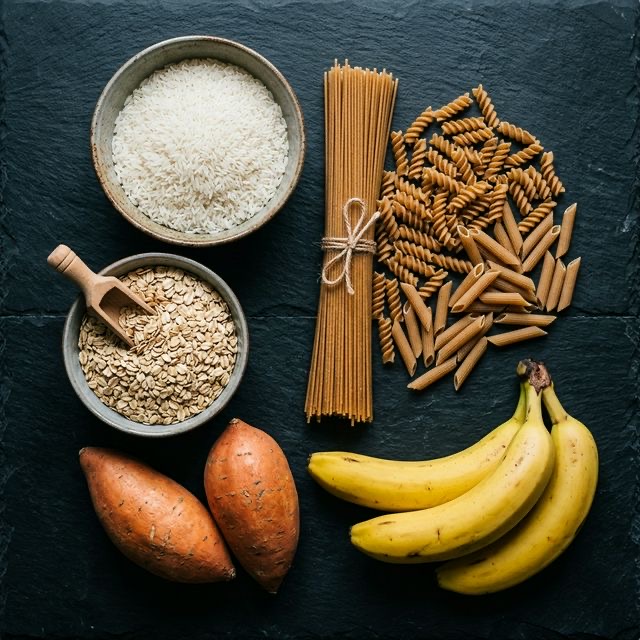
Complex carbohydrates should form the foundation – they provide steady energy and keep you fuller longer:
• Oatmeal – The classic breakfast (also great as a protein source!)
• Rice (white or brown) – easily digestible and versatile
• Potatoes and sweet potatoes – nutrient-rich and filling
• Whole grain bread and pasta – high fiber content
• Quinoa – also a good plant protein source
Fast carbohydrates have their place right before, during, or after training:
• Bananas – natural, fast energy
• White bread with honey – quickly available glucose
• Rice cakes – light and easy-to-digest snack
Timing: When Should You Eat Carbs?
Before training (2–3h prior): A complete meal with complex carbs, protein, and little fat. Example: Rice with chicken breast and vegetables.
During training: For sessions under 60 minutes, you generally don't need anything. For longer sessions (>60 min), fast carbs can maintain performance – sports drinks, bananas, or gels.
After training: The window for glycogen replenishment is especially large here. Studies show that delaying carbohydrate consumption by more than 3 hours can impair next-day performance – even with the same total amount over 24 hours.
The Myth: Do Carbs Make You Fat?
Short answer: No. As we explained in our post about fat vs. calories, de novo lipogenesis (conversion of carbs to body fat) is a highly inefficient process. Your body prefers to store carbs as glycogen or burn them directly as energy.
What actually makes you gain weight is a sustained caloric surplus – regardless of carb intake. Use our calorie calculator to determine your exact needs.
Carb-Loading for Competitions
For endurance events (marathons, Ironman, etc.), carb-loading is a scientifically proven strategy: increase carb intake to 8–12g/kg body weight for 2–3 days before the event. A study on professional soccer players showed greater running distances and higher sprint speeds as a result.
Conclusion
Carbohydrates are not the enemy – they're your most important training ally. Adjust your intake to your training intensity, rely on complex sources as your foundation, and use fast carbs strategically around your workouts. If you want to plan your nutrition, check out our recipes for many carb-rich meals.