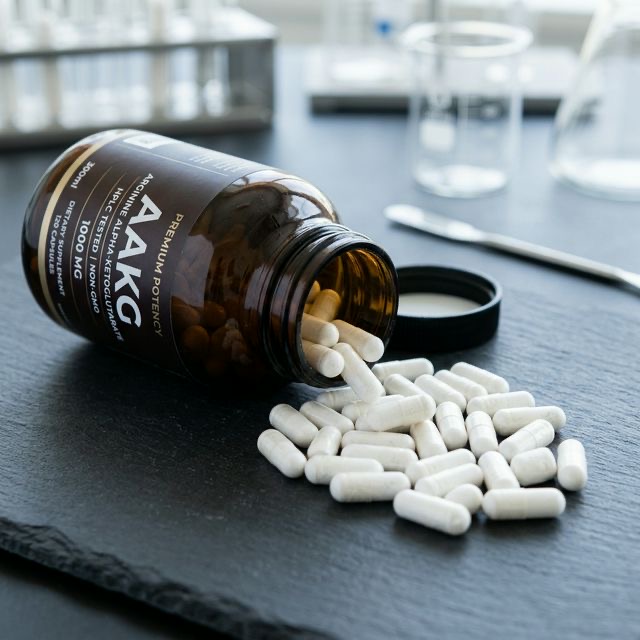
AAKG (Arginine Alpha-Ketoglutarate) was a standard supplement in pre-workout formulas for years. It promises better pump, more strength performance, and faster recovery. But what does the current evidence say – and is there a better alternative?
What Is AAKG?
AAKG is a compound of the amino acid L-arginine and alpha-ketoglutarate (an intermediate in energy metabolism). The idea: arginine is the precursor to nitric oxide (NO), which widens blood vessels and enables the famous "pump" as well as better nutrient delivery to muscles.
What Does the Research Say?
### ✅ What's Confirmed
• AAKG can increase nitric oxide production – that's the theoretical base mechanism
• One study showed improved bench press performance (but not aerobic capacity)
• AAKG can actually improve blood flow and enhance the "pump" effect
### ⚠️ What's Problematic
• The ergogenic effect is inconsistent according to Examine.com – some studies show effects, others don't
• The problem: oral arginine is largely broken down in the intestine (first-pass effect). Significantly less reaches the bloodstream than expected
• Hormonal effects (IGF-1, growth hormone) are often overstated – actual evidence is weak
• Required dosage according to research is 3.6–6g per day – many products are underdosed
AAKG vs. L-Citrulline: The Direct Comparison
This is where it gets interesting: L-citrulline is demonstrably more effective for NO production than AAKG/arginine. The reason:
1. Citrulline is not broken down in the intestine (no first-pass effect)
2. It's converted to arginine in the kidneys – essentially a delayed, more efficient arginine delivery
3. Studies show citrulline raises blood arginine levels more than the same amount of direct arginine
| Criterion | AAKG | L-Citrulline |
| NO Production | Moderate | High |
| Bioavailability | Low (intestinal breakdown) | High |
| Pump Effect | Present | Stronger |
| Performance Evidence | Inconsistent | Better (but also mixed) |
| Typical Dosage | 3.6–6g | 6–8g (malate) |
| Value for Money | Fair | Better |
When Can AAKG Still Make Sense?
• If you can't tolerate citrulline (rare)
• In combination with citrulline for maximum NO effect (experimental)
• For general cardiovascular health – the NO-related benefits for blood pressure and circulation are fundamentally real
Interesting: AKG and Longevity
Alpha-ketoglutarate (the AKG part of AAKG) has shown interesting longevity effects in animal studies – it extended lifespan in worms and mice. Early human studies suggest it might lower biological age (epigenetically). However, this is early research and no reason to massively supplement AAKG now.
Conclusion
AAKG isn't a bad supplement – but there's a demonstrably better alternative: L-citrulline. If you want the best possible pump and improved circulation, invest in 6–8g citrulline malate instead of AAKG. The higher bioavailability makes the difference. AAKG is a "nice to have," citrulline is the smarter choice.